500!

Ring the church bells! Sound the sirens! Blow your horns from coast to coast. Today I saw my 500th species of bird in North America this year. It’s all over and in the bag. There was no suspense. There was no cliff hanger. There was – in fact – no doubt. But still it feels great. A goal I set last year is achieved. I had some doubts along the way. Back in April I had to schedule this trip just to make sure. And the naysayers and Doubting Thomases had their doubts too, as they always do, so you just have to prove them wrong. And so I did.

Here is today’s bird-by-bird instant replay for you. I started the day at Moss Landing State Beach, but there were no Red Knots to be seen, the tide was high, covering the salt flats. Next stop was nearby Moonglow Dairy, a dairy farm that generously allows birders to enter and bird away from their operations. The property abuts Elkhorn Slough so it’s valuable ornithologically. The first target was Tricolored Blackbird, found almost exclusively within the state of California. Only a few feet inside the gate was a multi-hundred flock of blackbirds, many of which were Tricolored (496). Four more to go. I drove farther in to search for Ruff but I couldn’t tell where to turn so rather than do something wrong and get us all kicked out for good, I retreated.

A few miles down the road is Elkhorn Slough National Estuarine Research Reserve where I hoped to get some land birds. The gate was still locked so I parked and walked down the road where I thought I heard some chickadees or titmice. A few feet down the road I found the first of several Oak Titmice (497). Three more to go. I chased a woodpecker that I thought might be Nutall’s but I never got a good look. Just above me I saw a chickadee, but not just any old average chickadee, but a Chestnut-backed Chickadee (498), my sixth chickadee for the year. Two more! Then on the edge of the grass alighted a California Towhee (499). People, I know these are not scintillating birds but they are all worth the same – one tick on the checklist! One more to go. The list is moving right along now, I’m racking them up, and the sanctuary hasn’t even opened yet. I think I can do it this morning. What will be number 500?

I met up with another group of birders, one of whom knew Moonglow Dairy and gave me exact directions to find the Ruff. That would make a good 500, a glamorous Code 3 rarity. Should I give up Nutall’s Woodpecker or California Thrasher or some other commoner and go straight for the gold? No! Don’t try to rig the big one, get as many as you can get now or you’ll be sorry, you will soon see.

As we approached a barn, the guy who knows the area said he once flushed a Barn Owl a few years ago. That would make a good 500! We looked in two barns but no owl. A few minutes down the trail I thought I saw what might be a Wrentit in the bushes. As I searched, the lady in front of me said: “I have a Wrentit.” A sure one in the bush is worth a maybe one in the bush any day. I searched, and there to my wondering eyes should appear, this little beauty:

Wrentit, Elkhorn Slough National Estuarine Research Reserve, California

Wrentit! Big Year number 500! Plain and drab??? This is a good bird, now classified as a Sylviidae, an Old World warbler. My little group of birders congratulated me, earning me recognition from my peers, the only thing that matters I say. I could now walk the trails totally relaxed and enjoy the present for a few minutes. After that brief moment of California nirvana, it was back to the smelly dairy. I easily found the turn (take the first left and hug the fence). I found a distant bird that was a good candidate for a Ruff but instead it was a Pectoral Sandpiper. The Ruff hasn’t been seen since the 9th. Good thing I didn’t leave Elkhorn Slough early. In the closest cattle pen I watched a Peregrine Falcon stoop on a pigeon and make contact. The bird hit the ground but was still walking. The peregrine wheeled around and pounced, pinning it to the ground.

“Get off of me, you big oaf!”

A short struggle and it was all over. With a little more time left on the day I returned to Moss Landing and turned up one more bird – Surf Scoter (501), my first scoter of the year. And that concludes this year’s visit to Monterey. There are many more birds I need to see before the year is out, starting tomorrow. I found a place off Highway 101 on the way back to San Jose that looks promising for Yellow-billed Magpie, California’s only endemic bird. This Big Year West Coast Tour continues northbound.

Monterey Bay II

sunrise, Monterey Harbor, California

Always book two pelagic trips. After I drove to North Carolina from New Hampshire about 15 years ago, only to have my one trip canceled by weather, I have always booked two trips. Besides, you will get more trip birds. Today’s insurance policy trip was very similar to yesterdays. The range in size of the birds we saw ran from hummingbird to albatross. The whales and 4 species of dolphins showed very well.

Humpback Whales, Monterey Bay, California

Just past the harbor we got Pigeon Guillemot (491). Jaegers showed well, some right over the boat, first Long-tailed (492), then Pomerine (493). I missed Black Storm-Petrel, but that was all I missed. I spent more time at the bow and that made the difference.

They say Debra Shearwater has a booming voice. I call it the “Sonic Boom”. Here’s a person who has never once had to say: “Can everyone hear me ok?” Ever. Yesterday was a good example. “BLUE WHAAAAAAAAAALE !!!!!” The Sonice Boom took off, echoed off the Sierra Nevada, disrupted commercial aviation, paralyzed modern communication systems, and ground to a halt all marine life in Monterey Bay. Anybody who thought he was going to take a nap on board was rudely awakened. Not on this boat. Today she handed out a map of where, last Sunday, just this side of Pinnacles National Park, she saw 31 California Condors. Today was her birthday. This trip sold out in May, way earlier than any other. One of the leaders asked us to recognize this important date, with applause, I’m so glad they didn’t ask us to sing “Happy Birthday”!

Back on shore I continued to search for the rocky shorebirds, namely Wandering Tattler and Surfbird. First I found a Whimbrel (494). Fortuitously, I ran into a group of birders who told me they were on the tattler. I joined the group and we gave chase, as it moved from one rock pile to the next. Finally it came out and I got to count it (495). They hadn’t seen Surfbird all day and the setting sun was shining directly in the direction to look. I can search for this one next week in Washington. Another 12 hour day was done.

Only five more to go to 500! It really is possible tomorrow is the day. First I’m going to Moonglow Dairy to see if the Ruff is still there and to look for Tricolored Blackbird. At Elkhorn Slough I’ll look for Chestnut-backed Chickadee, Oak Titmouse, and few more things. Coincidentally, the last time I was in Monterey, in September of 2000, I was looking for my 500th ABA Life Bird. After the first trip with Shearwater Journeys I was stalled at 499. I couldn’t sleep that night. The next morning, on the second boat trip, on the harbor jetty, was Wandering Tattler – number 500. Now I am about to see that in one year, here in Monterey.

a day with Debi

Meet Debra Love Shearwater, “Warden of the Sea”, in her last season on Monterey Bay. She says if you added up all the hours she has spent on the brine, the total would approach six years! “That’s why I’m retiring!” I get it. All her trips are sold out this year so she added one more in October. Last chance! But – she is still running her Far Eastern Russia trips next year.

As you can see, the weather was clear, calm and mild but there was a pronounced swell and that makes for a long day. The grund is still moving. So here’s the rundown. In the harbor I added Heerman’s Gull (477), Brandt’s Cormorant (478), Black Turnstone (479) and Common Murre (480). Out farther we saw California Gull (481), Rhinoceros Auklet (482), Pink-footed Shearwater (483), Black-footed Albatross (484), Ashy Storm-Petrel (485), and Sabine’s Gull (486). I missed the fly-by skua (I need that one!), Flesh-footed Shearwater, and Long-tailed Jaeger. That’s why you do two trips – I could see these tomorrow. But I did not miss the bird of the day – nobody did since it was on the water – Tufted Puffin! (487) (ABA 636) (World 2830). I had no hope of seeing this bird here and thought there was a chance I could get it in Washington so this is a big bonus for the list.

Eight hours after shoving off I was on dry land at last. As I left the wharf I heard a familiar bird I had to see: California Scrub-Jay (488).

California Scrub-Jay, Monterey, California

I spent the next two hours in the Point Pinos area searching for rocky shorebirds, like Surfbird and Wandering Tattler. First I nailed down Pelagic Cormorant (489), then I was able to find one of the shorebirds, Black Oystercatcher (490), thanks to its bright shiny red bill visible in the distance.

Black Oystercatcher, Point Pinos, California.

Only ten more to go to hit 500! Today I added 14 species, the highest one day total since April 23 in Florida. Tomorrow I will only get a few, but I’m now beginning to think 500 is possible here in Monterey. I have to go to bed early again for tomorrow, without a drink. But that’s the sacrifice.

Monterey

Monterey, California

I posted this yesterday but forget to hit send.

It’s late and I’m tired so this will be brief. At the Tucson airport this morning I ran into Joy Bockius who was also going to San Jose. But being the wise and seasoned traveler, she booked the non-stop flight while I had to slog through Los Angeles. And then my flight was 45 minutes late! She probably arrived hours before me.

After working through California traffic on Highway 1, I stopped at Moss Landing Beach. My first bird was Western Gull (471), then Sanderling (472), and the prime target that you can only see if it moves, Snowy Plover (473):

Snowy Plover, Moss Landing State beach, California

In the harbor I added Elegant Tern (474) and the bonus bird, Long-tailed Duck (475), likely the only one I will see this year. After supper here at my sister’s house we walked the neighborhood and spooked up a covey of California Quail (476).

Tomorrow I head out to sea with Debi and crew. What will we see?

40 warblers

When I left New Hampshire with 39 warblers I was disappointed and didn’t think I had a chance to get to an even 40. That chance just arose. A Tropical Parula has been seen in Florida Canyon, Santa Ritas, off and on since 27 August. Today I gave chase, arriving at 7:20. The parking lot – not surprisingly – was full so I had to double park. “I’ll just be a moment.” I was lucky to arrive when I did. The bird was present when I got to the site, I watched it for a minute, (470)(ABA 635) and then it vanished. I waited around for an hour and a half and like most others, gave up on a second look. Down time was filled by a soaring Golden Eagle overhead and a Canyon Tree Frog on the side of the water tank.

For the curious, I drafted a list of the 40 warblers seen this year:

Now only 4 days until I leave for Monterey. Yesterday’s high there was 71 versus 92 here. It will be even cooler out on the sea. A Ruff just showed up at Moon Glow dairy Wednesday and with luck will linger a few days more.

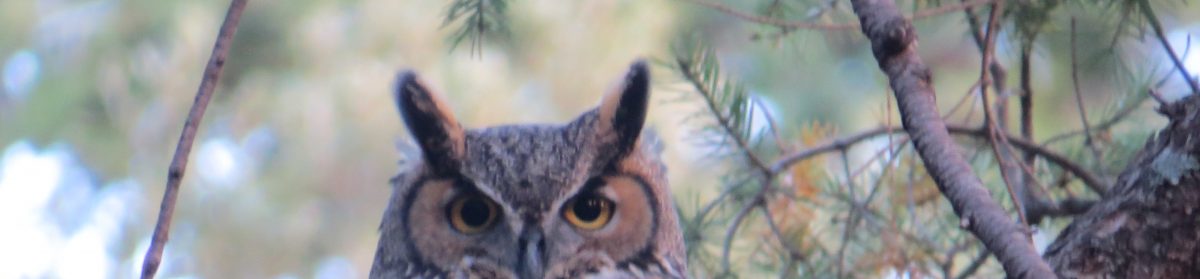
To keep your mind sharp I have a new Puzzler, this one photographic. It’s straight forward – name that bird:

The picture was taken by me, this year, “somewhere” in North America. Use any outside sources available.

I’ve added another trip to the Big Year. I left Texas in April a little sore that I missed many birds I hoped to see. I missed the seadeater, Audubon’s Oriole, Ringed Kingfisher, and Red-billed Pigeon. To keep it from eating at me, I signed up for the Rio Grande Valley Birding Festival in November. Normally I prefer to find my own birds but that didn’t go so well so I’m trying this. One of the trips is a Big Day van. Imagine, a Big Day within a Big Year. Does it get any bigger?